The neck is an important aspect in the mechanism for gait and Rottweiler breed type. It plays a quiet but significant role and is often overlooked by many when detailing the Rottweiler. From the standard: Neck - powerful, well muscled, moderately long, slightly arched and without loose skin.
When deviations occur in the angulation, length or conformation of the neck, the locomotion and correct breed type of the Rottweiler are compromised.
Function of the Neck
A weight shifting lever
Besides its obvious use in holding the head to the body via the spine, possessing many important muscle groups and the transmission of nerve impulses to the spinal cord, the neck plays a simple but pro-found task; the maintenance of forward stability while the Rottweiler is gaiting.
As the dog moves forward, the neck shifts the body weight, adjusting it to maintain stability. The standard requires a "neck, moderately long" to insure balance and that the highest effi-ciency is achieved during gaiting.
Despite the length and placement of the neck specified in the standard, in many exhibits we can observe incorrect deviations such as:
A. Varying lengths of neck, from short to long.
B. High to low angulation of the neck corresponding to the spine and shoulders.
A. Balance Point
In the correctly constructed Rottweiler, the "balance point" is posterior to the withers (see Fig 2). Changes in neck length adjust the balance point (Fig.1), or center of gravity for the dog, which
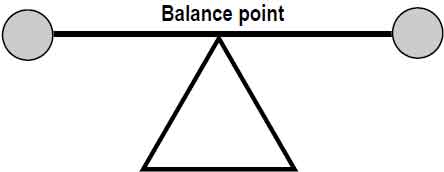
Fig. 1
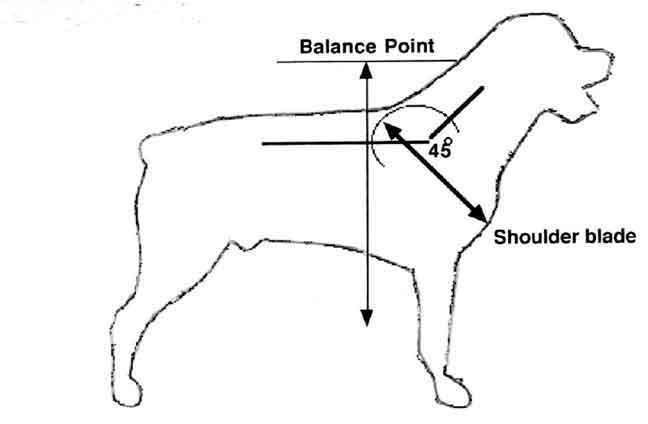 Fig. 2
Shows correct balance point with moderate length of neck correctly set on shoulders.
Fig. 2
Shows correct balance point with moderate length of neck correctly set on shoulders.
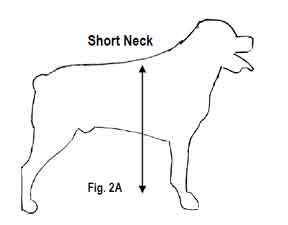
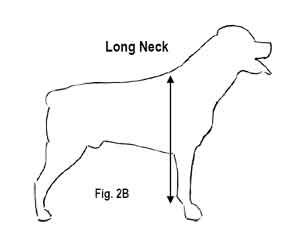
consequently influences the reach and stride of the Rottweiler. If the neck is short (Fig.2A), the balance point shifts back towards the rear, causing the dog to lower its head to attain lift and reach. This uses a higher expenditure of energy and causes fatigue. The opposite is a long neck. When a Rottweiler possesses a long neck, the balance point moves forward (Fig 2B), creating high lift and a loss in the efficiency of reach in the front legs.
B. Angulation of the Neck
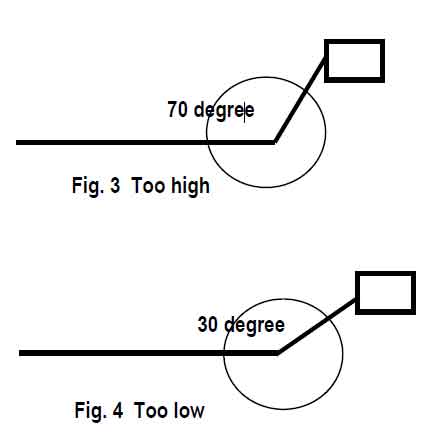
The neck is correctly positioned in Fig. 2 at an approximate 45-degree angle to the spine or 90-degree angle to the shoulder. Too high in neck carriage (Fig. 3), and the Rottweiler looses reach and efficiency. Too low in neck carriage (Fig. 4), the Rottweiler also looses reach/efficiency and may cause it to shuffle. Add to these incorrect neck sets are all angles that fall between. An additional anomaly is called a "U-Neck". Here, the neck contains a slight upward curve like that of the letter U.
Neck Morphology
The standard specifies a neck "powerful, well muscled, slightly arched". This morphological aspect of the neck is an integral part of Rottweiler breed type in both dogs and bitches. In the Rottweiler dog, the correct neck should be slightly arched, and proportionate to the head and shoulders. It should impress and exude power and strength in its musculature and circumference. Consequently, powerful muscular shoulders will match a powerful masculine head and muscular neck on the Rottweiler dog.
Although the Rottweiler bitch is distinctly feminine, there should be no loss of power or musculature in the neck because she is female. From the standard, "Bitches are distinctly feminine, but with-out weakness of substance or structure". Therefore, a powerful neck and head, accompanied by powerful shoulders should be observable on the bitch as well. Frail, weak, soft in appearance or overly muscular shoulders like the Pit Bull are not correct on the Rottweiler dog or bitch.
Occasionally, a strong head can be observed on a neck that lacks good muscling. Contrasting this is a small head on a powerful well-developed neck. Disproportionate symmetry occurs in both dogs and bitches. Examples of correct symmetry are shown in Fig. 5-6.
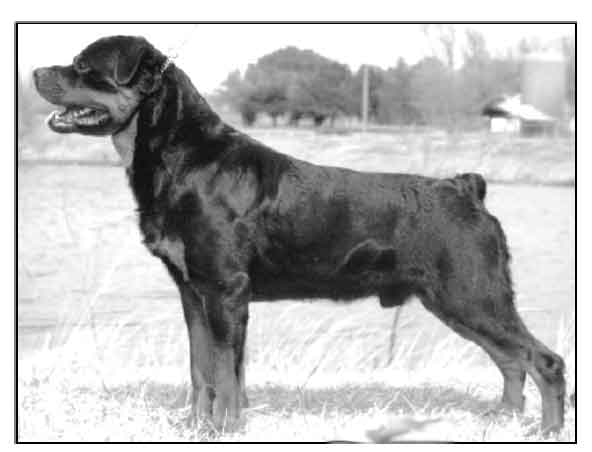 Fig .5
Dog
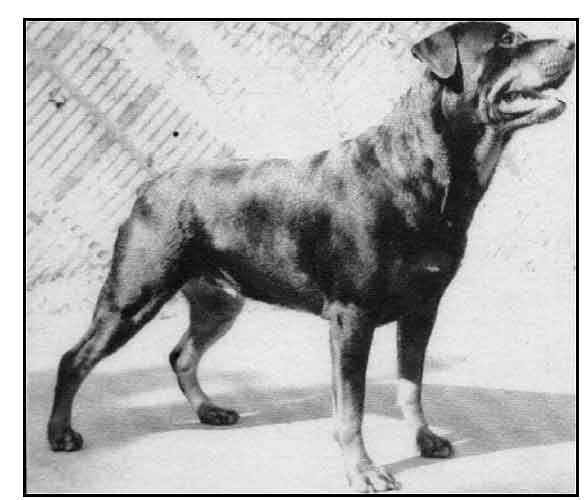 Fig .6
Bitch
Fig .6
Bitch
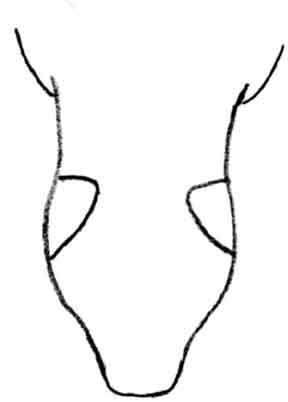
Despite the descriptive wording in the standard, some Rottweilers, both dogs and bitches, are occasionally seen possessing underdeveloped necks in circumference and/or muscling. A strong well proportioned neck when viewed from a "bird's eye" perspective should appear as wide as the width of the back skull - thick, muscular and powerful with no tapering. Fig.7 shows the correct outline of the neck.
Fig.7
Correct circumference
 |
|
Fig.8
Incorrect circumference
 |
Coat, Skin and Markings
Coat
The coat on the neck should be thick and coarse. An undercoat should be present and observ-able only by folding back the guard hairs of the top coat. The color of the undercoat is grey. The hair should always be straight, lying flat to the neck. Any wave in the neck hairs is faulted depending upon the amount present.
Skin
The skin should be tight, fitting close to the neck. "Throaty" loose skin is to be faulted depending upon the extent of looseness.
Markings
Markings on the neck are clear and well defined. A range in color is observable from mahogany as the preferred color, to dark tan as the upper limit of acceptability. Markings that are unclear, "sooty" or barely visible, as well as straw color markings are serious faults. The amount of the markings on the neck should be no more than 10-15% of the neck surface.
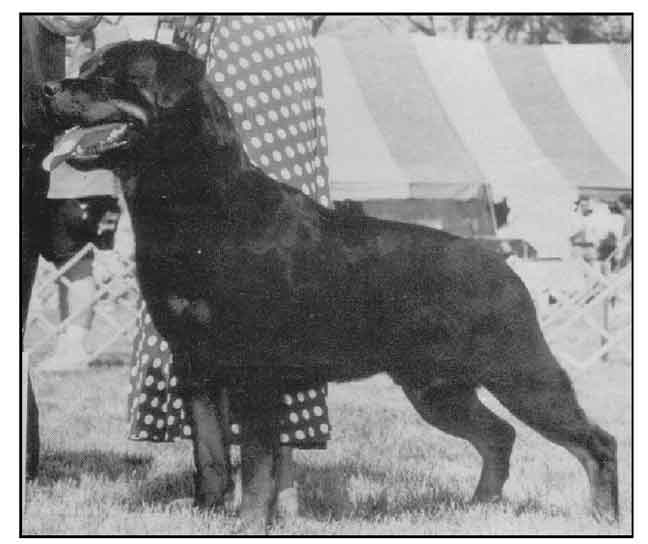 Fig. 9
Above (Fig. 9), is an excellent example of the correct Rottweiler neck in angulation, length, circumference, arch in neck, coat and markings.
Summary
In conformation and function, the neck of the Rottweiler is often overlooked. However, when a detailed examination of the standard is performed, the neck’s important role in breed type and locomo-tion become apparent. The elements of the neck, the arch, length, placement on the shoulders are in-herited characteristics, which cannot be developed or changed. Careful inspection of this aspect is im-portant to any breeding program and should be made prior to any choices concerning breeding partners.
References
Hollenbeck, Leon, The Dynamics of Canine Gait, Denlinger Publishing, 1981
McDowell, Lyon, The Dog in Action, Howell Book House, 1982.